What remains
Cluny III was quarried away stone by stone after the Revolution. Here is what survives on the site, piece by piece.
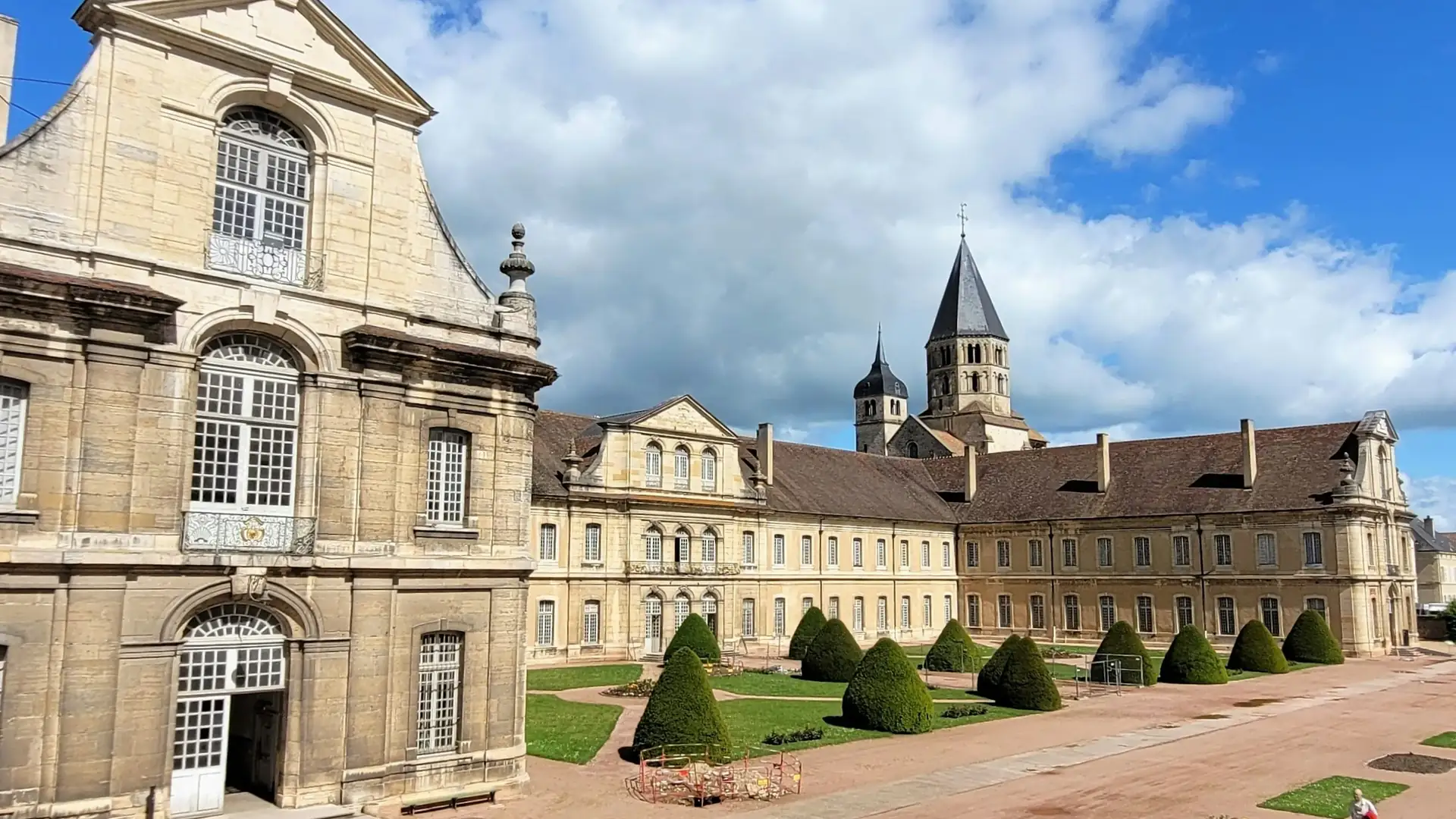
The transept, the Farinier and the museum sit a short walk apart, inside the same walled site.
- The transept
Where the church still stands
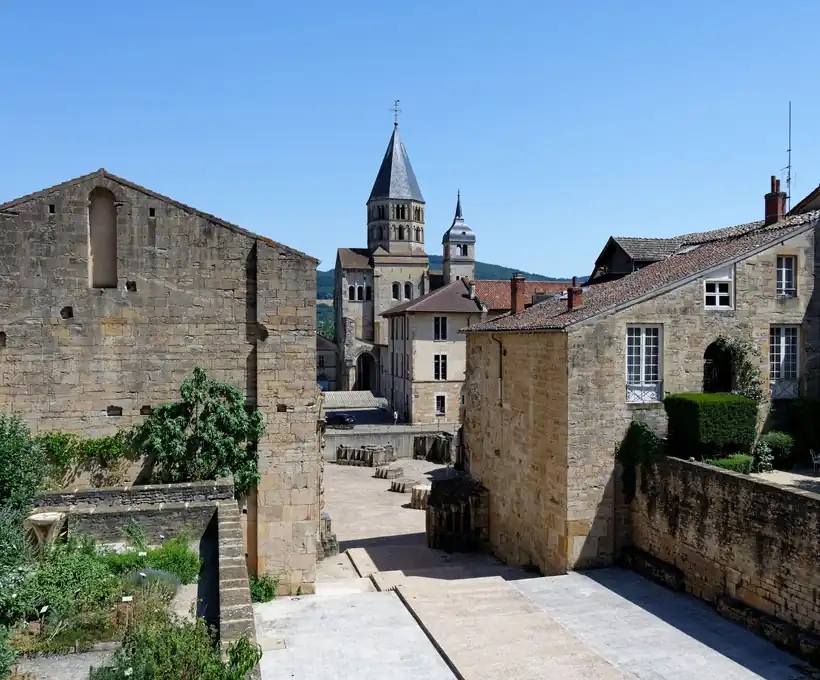
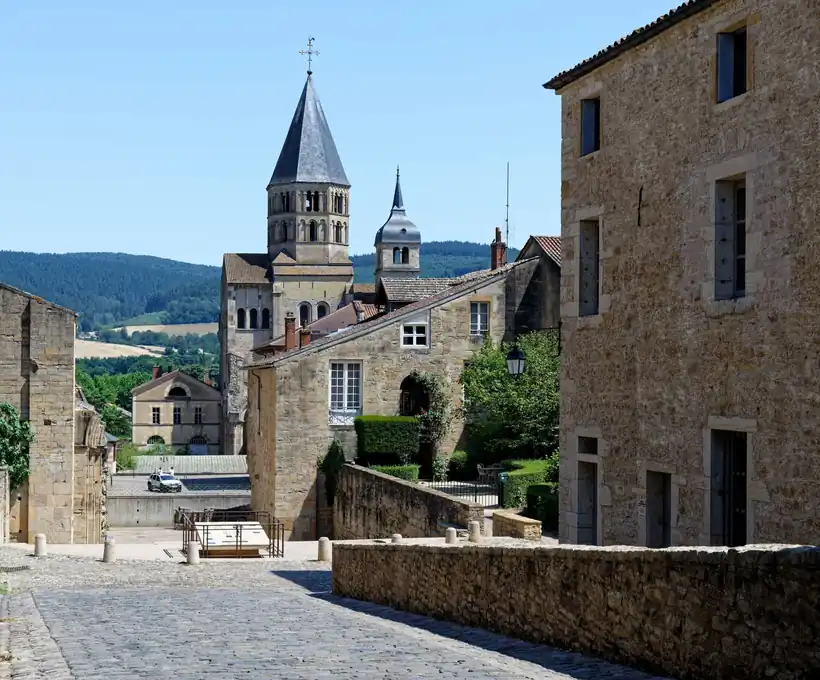
The surviving south transept of Cluny III is the one piece of the great church still doing the job it was built for. Open ground runs away from it on the side where the nave used to continue.
- The bell tower
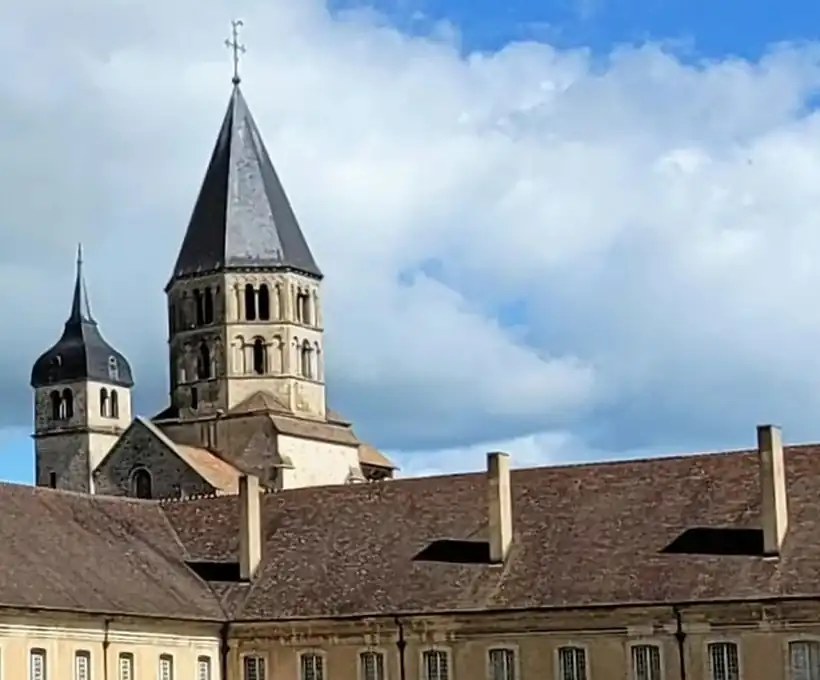
The Clocher de l'Eau Bénite
The octagonal tower still rising over the south transept is the landmark you see from all over town, and the clearest sign of the scale the whole church once had.
- The west towers
Two stumps at the far end
The lower sections of two towers that once stood at the church's western front survive, marking roughly where Cluny III finally ended — a long walk from the transept.
- The Farinier
A granary that outlived the church
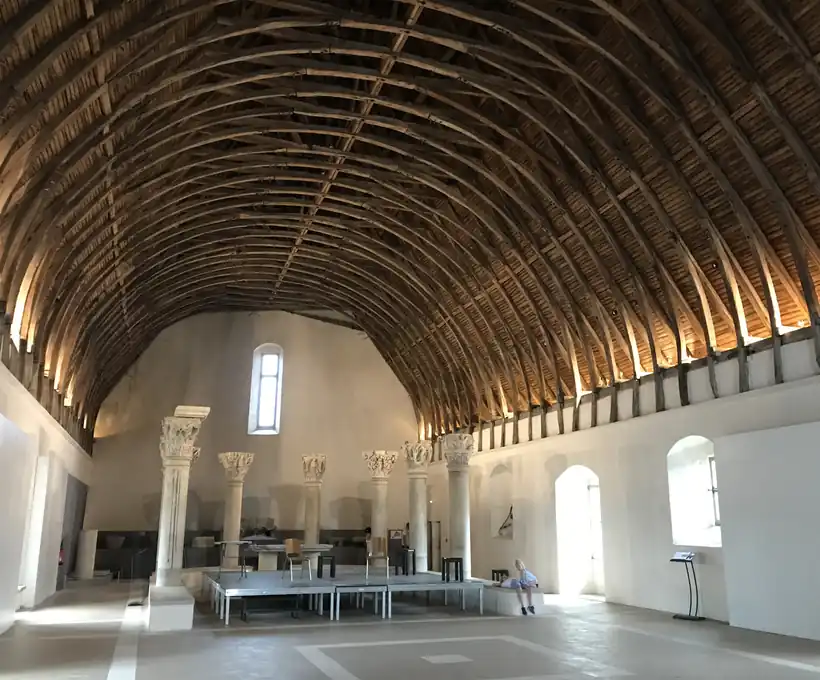
Built in the thirteenth century to store the monks' provisions and flour, the Farinier keeps its chestnut roof frame, shaped like an upturned ship's hull. It now houses the carved capitals from the choir of Cluny III.
- The museum
Palais Jean de Bourbon
The late-medieval palace now holds the Musée d'art et d'archéologie, where sculpture and fragments salvaged from the abbey help put the lost church back together in the mind.
Why most of it is gone
An abbey that answered only to the Pope
Founded in 910, Cluny was subject only to the Pope, free of local lords and bishops. By the twelfth century more than three hundred monasteries across Europe owed allegiance to it.
Built to be the largest church anywhere
The third abbey church, begun in 1088 under Abbot Hugh of Semur, was raised on an enormous scale: it remained the largest church in the world until St Peter's Basilica in Rome was rebuilt.
Sacked, sold, and quarried away
The Revolution ended it: the abbey was sacked in 1790, its library and archives burned in 1793, and the church itself sold and pulled down for building stone over the years that followed, until the monastery was mostly demolished by 1810.
What survived, and why
About a tenth of Cluny III's floor space survives: the south transept with its bell tower, and the lower parts of the two west towers. What's left is a fragment, but a fragment large enough to measure the whole lost building against.
Guides to the abbey
Timing your visit
Best time to visit Cluny Abbey
Cluny rarely feels crowded, so the real questions are season, light on the bell tower, and how long to allow.
Read the guide →Getting there
How to get to Cluny from Mâcon and Lyon
Cluny has no railway station of its own — here is how the TGV, the bus, and the A6 motorway actually connect.
Read the guide →What's left
What remains of Cluny Abbey
Cluny's great abbey church was quarried away stone by stone after the Revolution. Here is what that left standing.
Read the guide →On site
What to see at Cluny Abbey
The transept and bell tower, the Farinier's capitals, and the museum of what was salvaged.
Read the guide →Visiting with children
Cluny Abbey with kids
A vanished giant of a church, a hunt for carved faces in the Farinier, and free entry for every under-18.
Read the guide →Questions about visiting
Is this the abbey's own website?
No — this guide is independent and not affiliated with the Centre des monuments nationaux, the body that manages the abbey. For current hours, prices and tickets sold directly by the abbey, see the abbey's own website.
How much time does a visit take?
Reckon on ninety minutes to two hours to move through the transept and tower, the Farinier, and the museum in the Palais Jean de Bourbon — longer if you want to study the carved capitals properly.
What's the best time of day to visit?
Early or late in the opening hours, when low light catches the Clocher de l'Eau Bénite and the site is at its quietest. Midday tends to bring the most visitors and the flattest light.
How do I get to Cluny without a car?
Take the TGV to the Mâcon-Loché station, then the regional Line 701 bus, which connects to Cluny in about twenty minutes. There is no direct train into Cluny itself.
Is Cluny Abbey good for children?
It can be, with the right framing. The story of a church that was once the largest in the world and then almost entirely vanished tends to land well with curious children, and the carved capitals in the Farinier make a good spot-the-detail hunt.
Do under-18s need a ticket?
Under-18s enter free, as do EU residents aged 18 to 25 with valid ID. Check current entry terms on the abbey's own site before you go.
How much of the original abbey survives?
Around a tenth of the floor space of the great third church, Cluny III: the south transept and its bell tower, plus the lower parts of the two west towers. The Farinier and the museum hold carvings and fragments salvaged from the rest.
What are the best photographs to plan for?
The bell tower seen from the grounds, in low morning or evening light, and the chestnut roof of the Farinier above the carved capitals. Check signage on the day for any rules on flash or tripods.